Securing Apps and Data:
Fabrikam Inc.
Organization
Fabrikam Inc. — U.S. e-commerce · Azure + AWS
Status
01 // Environment Overview
Fabrikam runs a microservices architecture deployed across Azure Kubernetes Service (AKS) and Amazon EKS, authenticated via OpenID Connect and OAuth 2.0.
Customer data is stored in Azure SQL Database and Cosmos DB. CI/CD runs through GitHub Actions with automatic deployment on successful builds.
Architecture Flow
02 // Threat Analysis
Static Kubernetes secrets and long-lived tokens with manual rotation create persistent credential theft risk.
Overly permissive IaC templates deploy excessive RBAC roles that are discovered only after deployment.
Malicious dependencies and compromised GitHub Actions workflows can bypass pre-deployment security checks.
Admission policy failures allow privileged containers, HostPath mounts, and missing network policies.
Azure SQL and Cosmos DB on public endpoints remain exposed despite TLS encryption in transit.
Unmanaged community packages and absence of centralized scanning creates Log4Shell-class exposure.
03 // Security Controls
Preventive
- Azure Policy
- Managed Identities
- Private Link
- RBAC
- IaC Scanning (Checkov/tfsec)
- GitHub Advanced Security
- Workload Identity Federation
Detective
- Defender for Cloud
- Microsoft Sentinel
- Azure Monitor
- Anomaly Detection
- OAuth Abuse Detection
- Defender for Cloud Apps
Corrective
- Automated Remediation Playbooks
- Incident Response Workflows
- Continuous Compliance Monitoring
- Defender XDR Correlation
04 // Zero Trust Mapping
05 // Before vs After Architecture
BEFORE
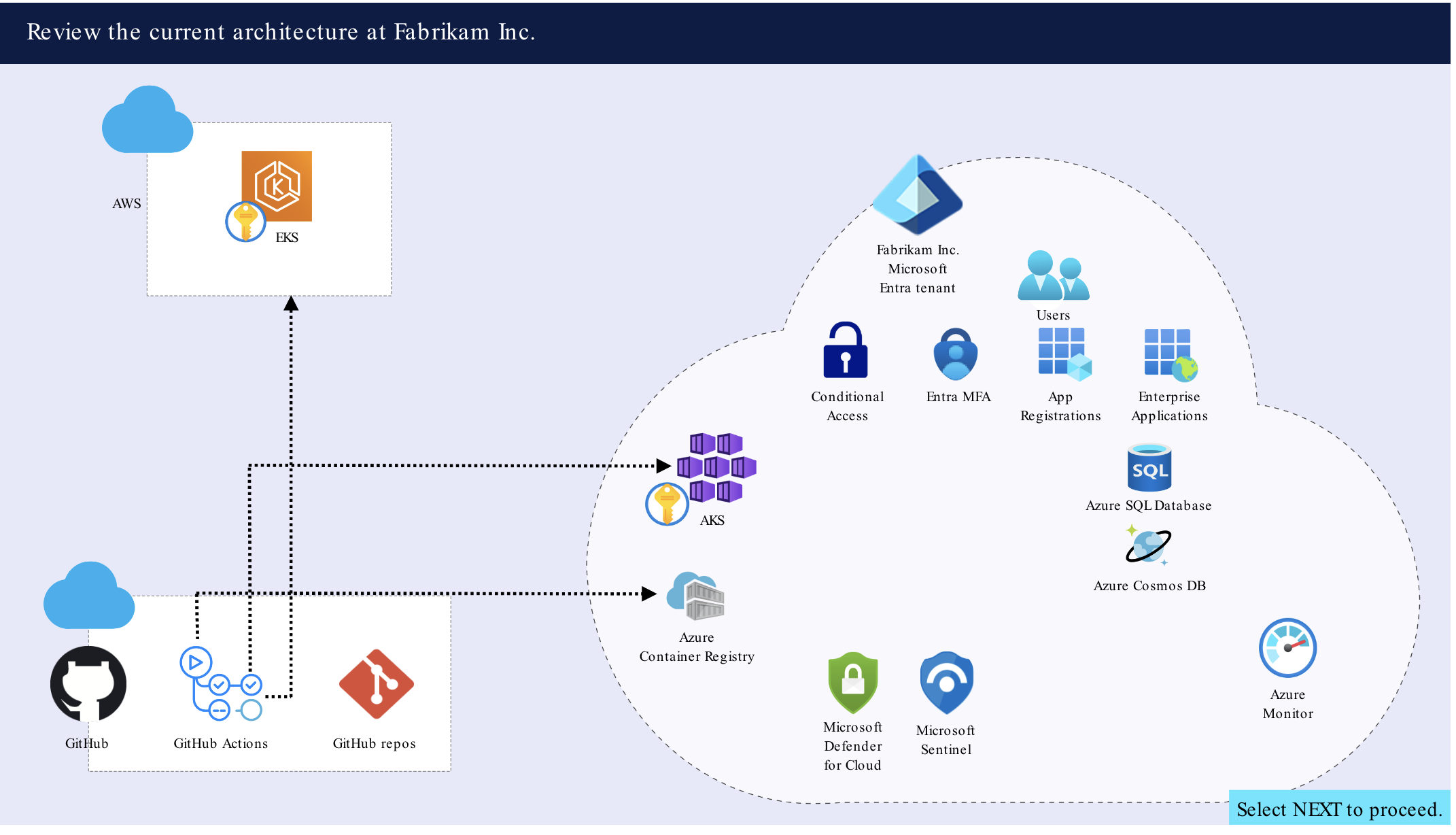
Original Fabrikam architecture — pre-remediation
AFTER
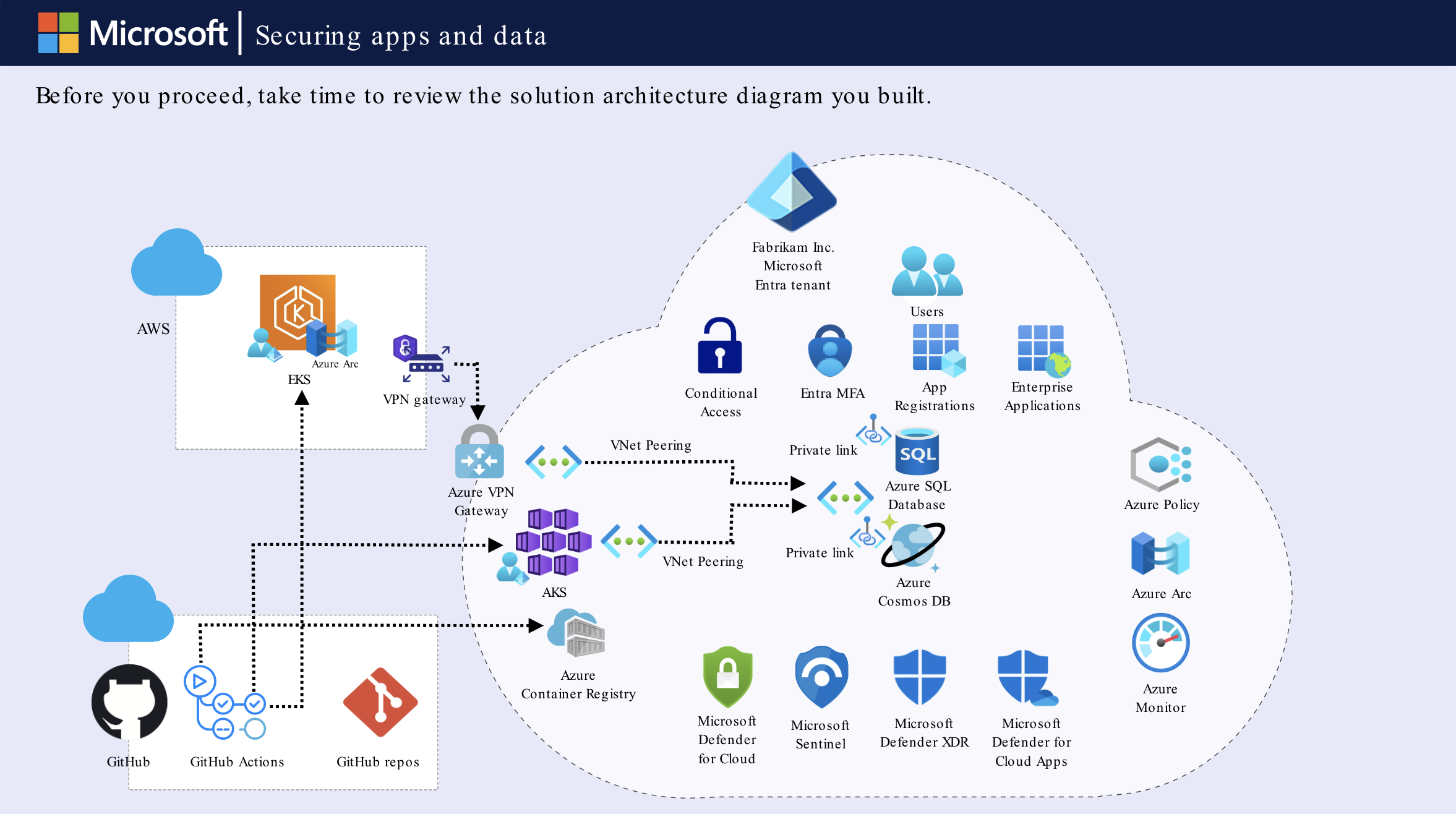
Hardened solution architecture — post-remediation
- • Static Kubernetes secrets
- • Manual secret rotation
- • Public database endpoints
- • Team-specific, siloed monitoring
- • No IaC validation before deployment
- • Developer-dependent secret scanning
- • Inconsistent incident response
- Managed Identities + Workload Identity Federation
- Azure Key Vault + automated rotation
- Private Link for all databases
- Centralized Microsoft Sentinel SIEM
- Checkov/tfsec gates in CI/CD pipeline
- GitHub Advanced Security secret scanning
- Unified Defender XDR response playbooks
06 // Key Takeaway
"The biggest security improvement was not a specific tool — it was the transition from static credentials and manual reviews to federated identity, centralized governance, and continuous automated enforcement across the entire deployment pipeline."
© 2026 Anagha Shyama Prakash • Cloud Security & Zero Trust Research Archive